
Understanding the Causes and Effects of the Korean War
- Heather

- Oct 19, 2025
- 5 min read
The Korean War, which lasted from 1950 to 1953, was a significant conflict that not only shaped the Korean Peninsula but also had far-reaching implications for global politics. Understanding the causes and effects of this war is crucial for grasping the complexities of modern international relations, particularly in the context of the Cold War. This blog post will delve into the various factors that led to the outbreak of the Korean War and explore its lasting impacts on Korea and the world.
Historical Context
To fully understand the Korean War, it is essential to consider the historical context leading up to the conflict. Korea was under Japanese rule from 1910 until the end of World War II in 1945. Following Japan's defeat, Korea was divided along the 38th parallel into two separate zones of occupation: the Soviet Union occupied the north, while the United States took control of the south. This division was initially intended to be temporary, but it laid the groundwork for the future conflict.
The ideological differences between the two occupying powers—communism in the north and capitalism in the south—further entrenched the division. As the Cold War intensified, both the Soviet Union and the United States sought to expand their influence in Asia, leading to increased tensions on the Korean Peninsula.
Causes of the Korean War
1. Ideological Conflict
One of the primary causes of the Korean War was the stark ideological divide between North and South Korea. The North, led by Kim Il-sung, adopted a communist regime supported by the Soviet Union, while the South, under Syngman Rhee, established a capitalist government backed by the United States. This ideological conflict created an environment ripe for confrontation, as both sides viewed the other as a threat to their way of life.
The North's desire to unify Korea under a communist government was fueled by the belief that the South was an oppressive regime. Conversely, the South viewed the North's actions as aggressive and expansionist. This mutual distrust and hostility set the stage for war.
2. The Role of Superpowers
The involvement of superpowers played a crucial role in the escalation of tensions in Korea. The United States and the Soviet Union were engaged in a global struggle for influence, and Korea became a battleground for their competing ideologies. The U.S. adopted a policy of containment, aiming to prevent the spread of communism, while the Soviet Union sought to expand its influence in Asia.
In 1949, the establishment of the People's Republic of China further complicated the situation. The Chinese Communist Party's victory emboldened North Korea and increased the likelihood of conflict. The superpowers' involvement not only intensified the ideological divide but also provided military and financial support to their respective allies, further escalating tensions.
3. The Korean Civil War
The Korean War can also be seen as a continuation of the civil war that had been brewing in Korea since the end of Japanese rule. Both the North and South had their own political factions and movements that sought to unify the country under their respective ideologies. The North's military incursions into the South in the late 1940s were met with resistance, leading to skirmishes and violence.
The situation reached a boiling point on June 25, 1950, when North Korean forces launched a full-scale invasion of South Korea. This act of aggression was not only a culmination of the internal conflict but also a direct challenge to the U.S. and its allies, prompting a swift military response.
4. Miscalculations and Misunderstandings
Miscalculations and misunderstandings between the leaders of North Korea, South Korea, and their respective superpower allies also contributed to the outbreak of the war. Kim Il-sung believed that the United States would not intervene militarily in the event of an invasion, a belief that was reinforced by the U.S. State Department's ambiguous statements regarding Korea.
On the other hand, the U.S. underestimated the resolve of the North Korean forces and the extent of Soviet support for the invasion. These miscalculations led to a rapid escalation of the conflict, as both sides were caught off guard by the intensity of the fighting.
Effects of the Korean War
1. Division of Korea
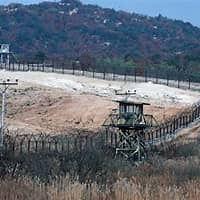
One of the most significant effects of the Korean War was the solidification of the division between North and South Korea. The war ended in an armistice on July 27, 1953, but no formal peace treaty was ever signed. As a result, the Korean Peninsula remains divided to this day, with the Korean Demilitarized Zone (DMZ) serving as a buffer between the two nations.
This division has had profound implications for both countries. North Korea has remained a totalitarian state with a centralized economy, while South Korea has developed into a democratic and economically prosperous nation. The stark contrast between the two Koreas serves as a reminder of the war's lasting impact.
2. Human Cost
The human cost of the Korean War was staggering. Estimates suggest that approximately 2.5 million people lost their lives during the conflict, including soldiers and civilians. The war also resulted in widespread destruction of infrastructure and homes, leaving many people displaced and traumatized.
The psychological scars of the war continue to affect both North and South Koreans. Families were separated, and the legacy of the conflict has created a deep-seated animosity between the two nations. The ongoing tensions and military posturing have perpetuated a state of fear and uncertainty in the region.
3. Global Political Landscape
The Korean War had significant implications for the global political landscape. It marked the first military conflict of the Cold War, setting a precedent for U.S. involvement in conflicts around the world. The war demonstrated the willingness of the United States to engage militarily to contain communism, leading to increased military commitments in other regions, such as Vietnam.
The conflict also solidified the division of the world into two opposing blocs: the Western capitalist nations led by the United States and the Eastern communist nations led by the Soviet Union. This division would shape international relations for decades to come.
4. Military Alliances and Treaties
In the aftermath of the Korean War, military alliances and treaties were established that would shape the security dynamics of the region. The United States and South Korea signed a mutual defense treaty in 1953, ensuring U.S. military support in the event of an attack. This alliance has continued to influence U.S. foreign policy in Asia and has led to a significant military presence in South Korea.
Additionally, the war prompted the formation of the Southeast Asia Treaty Organization (SEATO) in 1954, aimed at preventing the spread of communism in Southeast Asia. These alliances have had lasting effects on regional security and have contributed to ongoing tensions in the area.
5. Economic Consequences
The economic consequences of the Korean War were profound for both North and South Korea. The war devastated the North's economy, leading to widespread poverty and reliance on foreign aid, particularly from China and the Soviet Union. In contrast, South Korea received substantial economic assistance from the United States, which helped to rebuild its economy and lay the foundation for future growth.
The differing economic trajectories of the two Koreas have resulted in significant disparities in living standards and quality of life. South Korea has emerged as one of the world's leading economies, while North Korea remains isolated and impoverished.
Conclusion
The Korean War was a complex conflict with deep-rooted causes and far-reaching effects. Understanding the factors that led to the war and its consequences is essential for comprehending the current state of affairs on the Korean Peninsula and the broader implications for global politics. The ideological divide, the role of superpowers, and the human cost of the war continue to shape the lives of millions of people today.
As we reflect on the Korean War, it is crucial to recognize the importance of dialogue and diplomacy in resolving conflicts. The lessons learned from this war can inform our approach to contemporary issues and help pave the way for a more peaceful future.
Comments