
The Complete History of the American Constitution: From Origin to Evolution
- Heather

- Oct 14, 2025
- 5 min read
The American Constitution stands as a monumental document in the history of governance, embodying the principles of democracy, liberty, and justice. Its origins and evolution reflect the complexities of a nation striving to balance power and protect individual rights. This blog post delves into the complete history of the American Constitution, tracing its roots from the early colonial period to its current form.
The Colonial Foundations
Before the Constitution was drafted, the American colonies operated under a variety of charters and local laws. The early governance structures were influenced by British legal traditions, but as the colonies grew, so did the desire for self-governance.
The Magna Carta of 1215 and the English Bill of Rights of 1689 laid the groundwork for American political thought, emphasizing the importance of individual rights and limiting governmental power. These documents inspired colonial leaders to seek similar protections in their own governance.
The establishment of the first representative assemblies in the colonies, such as the Virginia House of Burgesses in 1619, marked a significant step towards self-rule. These early legislative bodies began to assert their authority, challenging the power of the British crown.

The Articles of Confederation
Following the American Revolution, the need for a unified national government became apparent. The Articles of Confederation, ratified in 1781, served as the first constitution of the United States. However, the Articles proved to be ineffective in addressing the challenges facing the new nation.
The lack of a strong central government led to economic turmoil, interstate disputes, and an inability to raise revenue or maintain a standing army. These weaknesses highlighted the necessity for a more robust framework of governance.
In 1786, a convention was called in Annapolis to address these issues, but it was poorly attended. Nevertheless, the seeds for a more comprehensive solution were sown, leading to the Constitutional Convention in Philadelphia in 1787.
The Constitutional Convention
The Constitutional Convention convened in May 1787, bringing together some of the brightest minds of the time, including George Washington, James Madison, and Benjamin Franklin. The goal was to create a new constitution that would address the shortcomings of the Articles of Confederation.
The debates were intense, with delegates divided on key issues such as representation, the balance of power, and the protection of individual rights. The Virginia Plan proposed a strong central government with representation based on population, while the New Jersey Plan favored equal representation for each state.
Ultimately, the Great Compromise was reached, establishing a bicameral legislature with the House of Representatives based on population and the Senate providing equal representation for each state. This compromise was crucial in ensuring the support of both large and small states.

Ratification and the Bill of Rights
After the Constitution was drafted, it faced the challenge of ratification. Federalists, who supported the new Constitution, argued that a strong central government was necessary for national stability. In contrast, Anti-Federalists feared that such a government would infringe upon individual liberties.
The ratification process was contentious, with several states initially refusing to sign. To address the concerns of the Anti-Federalists, the Federalists promised to add a Bill of Rights once the Constitution was ratified. This assurance helped secure the necessary support, and the Constitution was ratified in 1788.
The Bill of Rights, consisting of the first ten amendments, was ratified in 1791. These amendments guaranteed fundamental rights such as freedom of speech, religion, and the press, as well as protections against unreasonable searches and seizures.
The Constitution in Practice
With the Constitution in effect, the new government faced numerous challenges. The establishment of the judiciary, the creation of a national bank, and the interpretation of the Constitution itself became focal points of political debate.
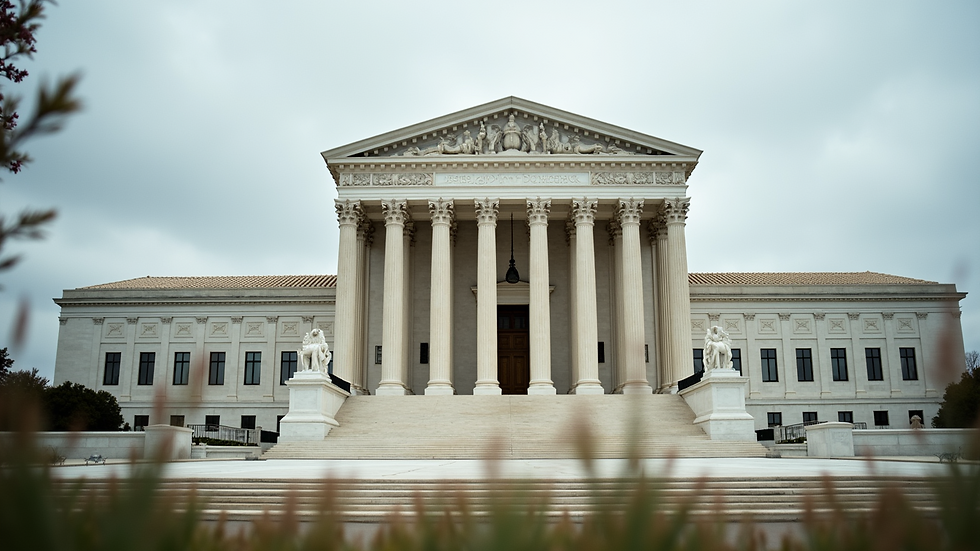
The Supreme Court, established by Article III of the Constitution, played a crucial role in interpreting the document. Landmark cases such as Marbury v. Madison (1803) established the principle of judicial review, allowing the Court to invalidate laws that conflicted with the Constitution.
As the nation expanded westward, the Constitution was tested by issues such as slavery, states' rights, and the treatment of Native Americans. The compromises made to address these issues, such as the Missouri Compromise of 1820, highlighted the ongoing tensions within the framework of the Constitution.
The Civil War and Reconstruction
The divisive issue of slavery ultimately led to the Civil War, a conflict that would challenge the very foundation of the Constitution. The Southern states' secession and the subsequent war raised questions about the nature of the Union and the limits of federal power.
In response to the war, the Reconstruction Amendments were adopted. The Thirteenth Amendment abolished slavery, the Fourteenth Amendment granted citizenship and equal protection under the law, and the Fifteenth Amendment prohibited voting discrimination based on race.
These amendments significantly expanded the scope of the Constitution, aiming to protect the rights of formerly enslaved individuals and ensure their integration into American society. However, the struggle for civil rights continued long after Reconstruction, leading to further amendments and legal battles.
The Progressive Era and the New Deal
The early 20th century brought about significant social and political changes, prompting calls for constitutional reform. The Progressive Era sought to address issues such as corruption, inequality, and the influence of big business in politics.
During this time, several amendments were ratified, including the Sixteenth Amendment, which established a federal income tax, and the Nineteenth Amendment, granting women the right to vote. These changes reflected the evolving values of American society and the need for the Constitution to adapt to new realities.
The Great Depression of the 1930s led to the New Deal, a series of programs and reforms aimed at economic recovery. President Franklin D. Roosevelt's administration faced challenges regarding the limits of executive power and the role of the federal government in regulating the economy.
The Civil Rights Movement and Modern Amendments
The Civil Rights Movement of the 1950s and 1960s sought to address systemic racism and discrimination, leading to significant constitutional changes. Landmark legislation, such as the Civil Rights Act of 1964 and the Voting Rights Act of 1965, aimed to enforce the rights guaranteed by the Constitution.
The Supreme Court played a pivotal role in this movement, with decisions such as Brown v. Board of Education (1954) declaring racial segregation in public schools unconstitutional. These rulings reinforced the principle of equal protection under the law and expanded the interpretation of the Constitution to include civil rights.
In recent decades, the Constitution has continued to evolve in response to contemporary issues, including debates over campaign finance, same-sex marriage, and healthcare. The amendment process, outlined in Article V, remains a vital mechanism for adapting the Constitution to changing societal values.
Conclusion
The American Constitution is a living document that has evolved over more than two centuries. From its origins in colonial governance to its current interpretation, the Constitution reflects the ongoing struggle for democracy, justice, and individual rights.
As society continues to change, the Constitution will undoubtedly face new challenges and interpretations. Understanding its history and evolution is essential for appreciating the principles that underpin American democracy and the ongoing quest for a more perfect union.
The journey of the Constitution is far from over, and its future will depend on the collective will of the people to uphold the values enshrined within its pages.
Comments