
Exploring the Origins and Evolution of the Space Race
- Heather

- Oct 12, 2025
- 4 min read
The Space Race was a pivotal period in human history, marked by intense competition between the United States and the Soviet Union to achieve significant milestones in space exploration. This blog post delves into the origins and evolution of the Space Race, examining the political, technological, and cultural factors that fueled this extraordinary chapter in the quest for knowledge beyond our planet.

The Cold War Context
The Space Race emerged during the Cold War, a time characterized by geopolitical tension between the United States and the Soviet Union. Following World War II, both superpowers sought to assert their dominance on the global stage, leading to a fierce rivalry that extended into various domains, including military, technology, and space exploration.
The ideological conflict between capitalism and communism played a crucial role in shaping the Space Race. Each nation aimed to demonstrate its superiority not only through military might but also through scientific and technological achievements. The launch of Sputnik 1 by the Soviet Union in 1957 marked a significant turning point, igniting a sense of urgency in the United States to catch up.

The Launch of Sputnik
On October 4, 1957, the Soviet Union successfully launched Sputnik 1, the first artificial satellite to orbit the Earth. This event sent shockwaves through the United States, as it not only demonstrated the Soviet Union's technological capabilities but also raised concerns about national security. The fear of falling behind in the space race prompted the U.S. government to take immediate action.
In response, President Dwight D. Eisenhower established the National Aeronautics and Space Administration (NASA) in 1958. This agency was tasked with coordinating the nation's efforts in space exploration and research. The launch of Sputnik also led to the creation of the National Defense Education Act, which aimed to improve science and mathematics education in American schools to cultivate a new generation of scientists and engineers.
The impact of Sputnik extended beyond the realm of technology; it also influenced public perception and culture. The idea of space exploration captured the imagination of the American public, leading to a surge in interest in science fiction literature, films, and television shows.
The Race to the Moon
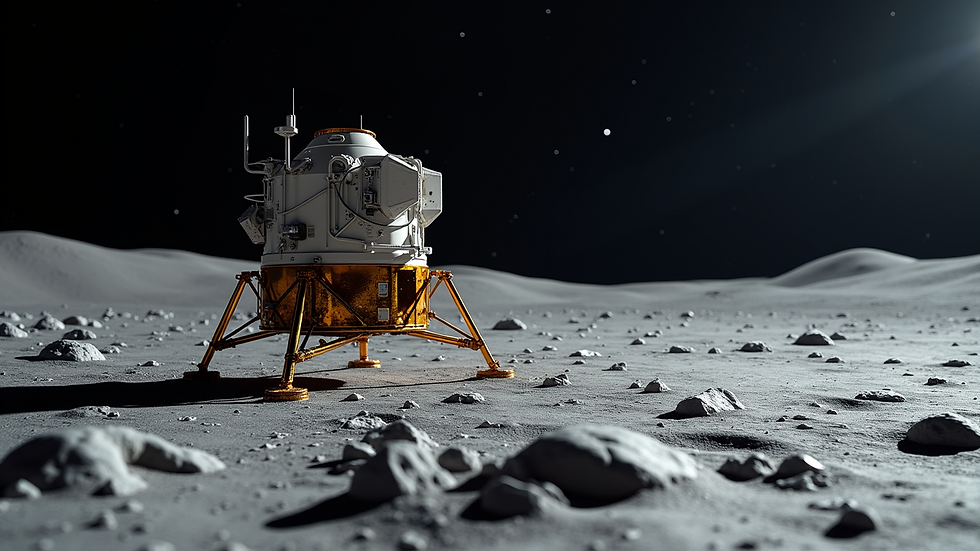
As the 1960s approached, the Space Race intensified, with both nations setting their sights on the ultimate goal: landing a human on the Moon. In 1961, President John F. Kennedy delivered a historic speech before a joint session of Congress, declaring the ambitious goal of sending an American astronaut to the Moon by the end of the decade.
This declaration galvanized NASA and the American public, leading to the Apollo program's establishment. The Apollo missions aimed to develop the technology and capabilities necessary for lunar exploration. The first successful crewed mission, Apollo 11, took place on July 20, 1969, when astronauts Neil Armstrong and Buzz Aldrin became the first humans to set foot on the lunar surface.
Technological Innovations
The Space Race spurred remarkable technological advancements that extended beyond space exploration. The competition between the United States and the Soviet Union led to innovations in various fields, including telecommunications, materials science, and computer technology.
One notable development was the miniaturization of electronics, which allowed for the creation of smaller and more efficient spacecraft. The need for reliable communication systems also led to advancements in satellite technology, paving the way for modern telecommunications and GPS systems.
Moreover, the Space Race fostered international collaboration in scientific research. The establishment of the International Space Station (ISS) in the late 1990s can be traced back to the cooperative spirit that emerged from the competitive atmosphere of the Space Race.
Cultural Impact
The Space Race had a profound impact on popular culture, inspiring a generation of dreamers and innovators. The achievements of astronauts and scientists became sources of national pride, and the media played a crucial role in shaping public perception of space exploration.
Television broadcasts of space missions captivated audiences, and iconic moments, such as the Apollo 11 Moon landing, became etched in the collective memory of the nation. The imagery of astronauts walking on the lunar surface and the famous words, "That's one small step for man, one giant leap for mankind," resonated deeply with people around the world.
The Space Race also influenced art, literature, and music. Science fiction became a popular genre, with authors like Arthur C. Clarke and Isaac Asimov exploring themes of space travel and extraterrestrial life. Films such as "2001: A Space Odyssey" and "The Right Stuff" celebrated the spirit of exploration and the human desire to reach for the stars.
The End of the Space Race
By the early 1970s, the Space Race began to shift in focus. The successful Apollo 11 mission marked a significant achievement, but subsequent missions faced challenges and budget constraints. The political climate in the United States also changed, with growing public disinterest in space exploration as domestic issues took precedence.
In 1975, the United States and the Soviet Union participated in the Apollo-Soyuz Test Project, a joint mission that symbolized a thawing of Cold War tensions. This collaboration marked the end of the Space Race as both nations recognized the potential for cooperation in space exploration.
Legacy of the Space Race
The legacy of the Space Race continues to influence contemporary space exploration efforts. The technological advancements and scientific knowledge gained during this period laid the groundwork for future missions to Mars, the establishment of private space companies, and international collaborations in space research.
Today, space exploration is no longer solely the domain of superpowers. Private companies like SpaceX and Blue Origin are pushing the boundaries of what is possible, while international partnerships, such as the Artemis program, aim to return humans to the Moon and eventually send astronauts to Mars.
The Space Race serves as a reminder of humanity's capacity for innovation and exploration. It highlights the importance of collaboration and the pursuit of knowledge, inspiring future generations to look beyond our planet and explore the cosmos.
Conclusion
The Space Race was a defining moment in history, driven by competition, innovation, and the human spirit of exploration. From the launch of Sputnik to the Apollo Moon landing, this era reshaped our understanding of what is possible in space exploration. As we continue to venture into the cosmos, the lessons learned from the Space Race will guide us in our quest to uncover the mysteries of the universe and inspire future generations to reach for the stars.

Comments