
A Comprehensive Guide to Understanding the American Civil War
- Heather

- Oct 14, 2025
- 4 min read
The American Civil War, fought from 1861 to 1865, remains one of the most significant events in United States history. It was a conflict that not only shaped the nation but also had profound implications for the future of democracy, civil rights, and the social fabric of the country. This guide aims to provide a comprehensive overview of the American Civil War, covering its causes, key events, major figures, and lasting impact.
Causes of the Civil War
The American Civil War was rooted in a complex web of social, economic, and political factors. Understanding these causes is essential to grasp the motivations behind the conflict.
Slavery
At the heart of the Civil War was the issue of slavery. The Southern states relied heavily on an agricultural economy that depended on enslaved labor, while the Northern states were increasingly moving towards industrialization and a more diverse economy. The moral and ethical debates surrounding slavery intensified, leading to a deep divide between the North and South.
States' Rights
Another significant factor was the concept of states' rights. Southern states believed they had the right to govern themselves and make their own laws, including the right to maintain slavery. This belief clashed with the Northern perspective, which emphasized a stronger federal government and the need to preserve the Union.
Economic Differences
Economic disparities between the North and South also played a crucial role. The North was more industrialized, with a growing economy that favored free labor, while the South remained agrarian and dependent on slave labor. These differences created tensions over tariffs, trade policies, and economic priorities.
Political Events
Several political events escalated tensions, including the Missouri Compromise, the Compromise of 1850, and the Kansas-Nebraska Act. Each of these events attempted to address the issue of slavery in new territories but ultimately failed to provide a lasting solution, further polarizing the nation.
Key Events of the Civil War
The Civil War was marked by numerous battles and significant events that shaped its course. Here are some of the most important moments:
The Attack on Fort Sumter
The war officially began on April 12, 1861, when Confederate forces fired on Fort Sumter in South Carolina. This attack marked the start of hostilities and led to President Abraham Lincoln calling for troops to suppress the rebellion.
Major Battles
Several key battles defined the Civil War, including:
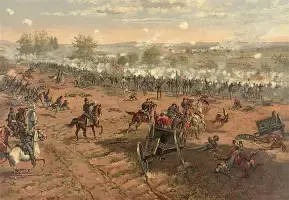
The Battle of Gettysburg (1863): Often considered the turning point of the war, this battle resulted in a significant Union victory and marked the beginning of the decline of Confederate forces.
The Battle of Antietam (1862): Known as the bloodiest single day in American history, this battle ended in a stalemate but provided President Lincoln the opportunity to issue the Emancipation Proclamation.
The Siege of Vicksburg (1863): This Union victory gave the North control of the Mississippi River, effectively splitting the Confederacy in two.
Emancipation Proclamation
On January 1, 1863, President Lincoln issued the Emancipation Proclamation, which declared that all enslaved people in Confederate-held territory were to be set free. This pivotal moment not only changed the nature of the war but also added a moral imperative to the Union's cause.
The End of the War
The Civil War came to a close on April 9, 1865, when Confederate General Robert E. Lee surrendered to Union General Ulysses S. Grant at Appomattox Court House. This surrender marked the beginning of the end for the Confederacy and set the stage for the Reconstruction era.

Major Figures of the Civil War
The American Civil War featured numerous influential figures whose actions and decisions shaped the course of the conflict.
Abraham Lincoln
As the 16th President of the United States, Abraham Lincoln played a crucial role in preserving the Union. His leadership during the war and his commitment to ending slavery were instrumental in shaping the nation’s future.
Ulysses S. Grant
General Ulysses S. Grant was the commanding general of the Union Army and is best known for his aggressive tactics and strategic victories. His leadership was pivotal in securing Union victories and ultimately leading to the defeat of the Confederacy.
Robert E. Lee
General Robert E. Lee was the commander of the Confederate Army and is often regarded as one of the greatest military leaders in American history. His tactical brilliance was evident in many battles, but he ultimately faced defeat as the war progressed.
Frederick Douglass
Frederick Douglass was a former enslaved person who became a leading abolitionist and advocate for civil rights. His writings and speeches were influential in shaping public opinion against slavery and promoting the cause of freedom.
The Impact of the Civil War
The American Civil War had far-reaching consequences that continue to resonate today.
Reconstruction Era
Following the war, the Reconstruction era aimed to rebuild the South and integrate formerly enslaved people into society. This period was marked by significant political, social, and economic changes, but it also faced considerable resistance and challenges.
Civil Rights
The Civil War laid the groundwork for the civil rights movement. The abolition of slavery and the subsequent amendments to the Constitution (13th, 14th, and 15th Amendments) aimed to secure rights for African Americans, although full equality would take many more decades to achieve.
National Unity
The war ultimately preserved the Union, but it also highlighted the deep divisions within American society. The legacy of the Civil War continues to influence discussions about race, equality, and national identity.
Cultural Memory
The Civil War has left an indelible mark on American culture, inspiring countless books, films, and artworks. It serves as a reminder of the struggles for freedom and equality that have shaped the nation.
Conclusion
The American Civil War was a defining moment in the history of the United States. Its causes, key events, and lasting impact continue to shape the nation today. Understanding this complex conflict is essential for grasping the ongoing struggles for civil rights and equality in America. As we reflect on the lessons of the Civil War, it is crucial to recognize the importance of unity, justice, and the ongoing pursuit of a more perfect union.

Comments